How much of a raise should you give your nanny?
By the maklo team · November 29, 2026 · 4 min read
A typical yearly raise for a nanny is 5 to 10 percent: a cost-of-living adjustment plus a merit raise for good work. Care.com's guidance breaks it into 2 to 4 percent for cost of living and 3 to 7 percent for merit, and another Care.com guide puts a typical raise at about $1 an hour per year of employment, more if the role has grown. Bigger raises make sense when the job itself grows, such as a second child.
Raises produced some of the longest threads in the six months of r/NannyEmployers posts we read, including a raise request "we can't afford" at 254 comments and a "large pay increase" request at 154. The money is rarely the whole problem. The hard part is answering well when the number you can pay isn't the number you were asked for.
Step 1: Start from inflation
Check how much prices rose over the past year with the Bureau of Labor Statistics' Consumer Price Index. If your nanny's pay doesn't keep pace, they took a pay cut. That's the cost-of-living part.
Step 2: Add merit
Then add for performance. A nanny who's reliable, communicates well and has grown with your children has earned more than inflation. The 3 to 7 percent merit range above is a reasonable guide; your budget sets the ceiling.
Step 3: Price changes to the job
Some raises aren't about the anniversary at all. Raise the rate when:
- A new baby arrives. Caring for two children is a different job from caring for one.
- The job becomes a nanny share. Two families means more children and more coordination.
- Duties grow. Household tasks, cooking for the family, school pickups, a second home.
- Hours change. Fewer guaranteed hours with the same rate is a pay cut, even if nobody calls it one.
Step 4: Check the market
National averages are a starting point, not the answer. Care.com's 2026 cost of care report puts the average weekly nanny cost at $870, up about 5% from the year before. Rates in New York, the Bay Area, Boston and DC run well above that, so compare with local postings and what other families in your area pay.
What a big ask really costs
Here's how a request that sounds modest per hour adds up. A nanny earns $28 an hour with 50 guaranteed hours a week (40 regular plus 10 at the overtime rate, as federal law requires for hours over 40), and asks for $35. (Illustrative numbers.)
| Rate | Weekly pay at 50 hours | Change per week | Change per year (52 weeks) |
|---|---|---|---|
| $28 now | 40 × $28 + 10 × $42 = $1,540 | ||
| $32 | 40 × $32 + 10 × $48 = $1,760 | +$220 | +$11,440 |
| $35 asked | 40 × $35 + 10 × $52.50 = $1,925 | +$385 | +$20,020 |
Those are wages only. If you pay on the books you also pay your share of payroll taxes on top, starting with 7.65% for Social Security and Medicare on wages above the IRS threshold, plus federal and state unemployment tax.
One more line matters if your hours are about to change. If a child starts preschool and you'll need 40 hours instead of 50, the nanny earns $1,400 a week even at $35, which is $140 less than today's $1,540. Put both changes on the table in the same conversation.
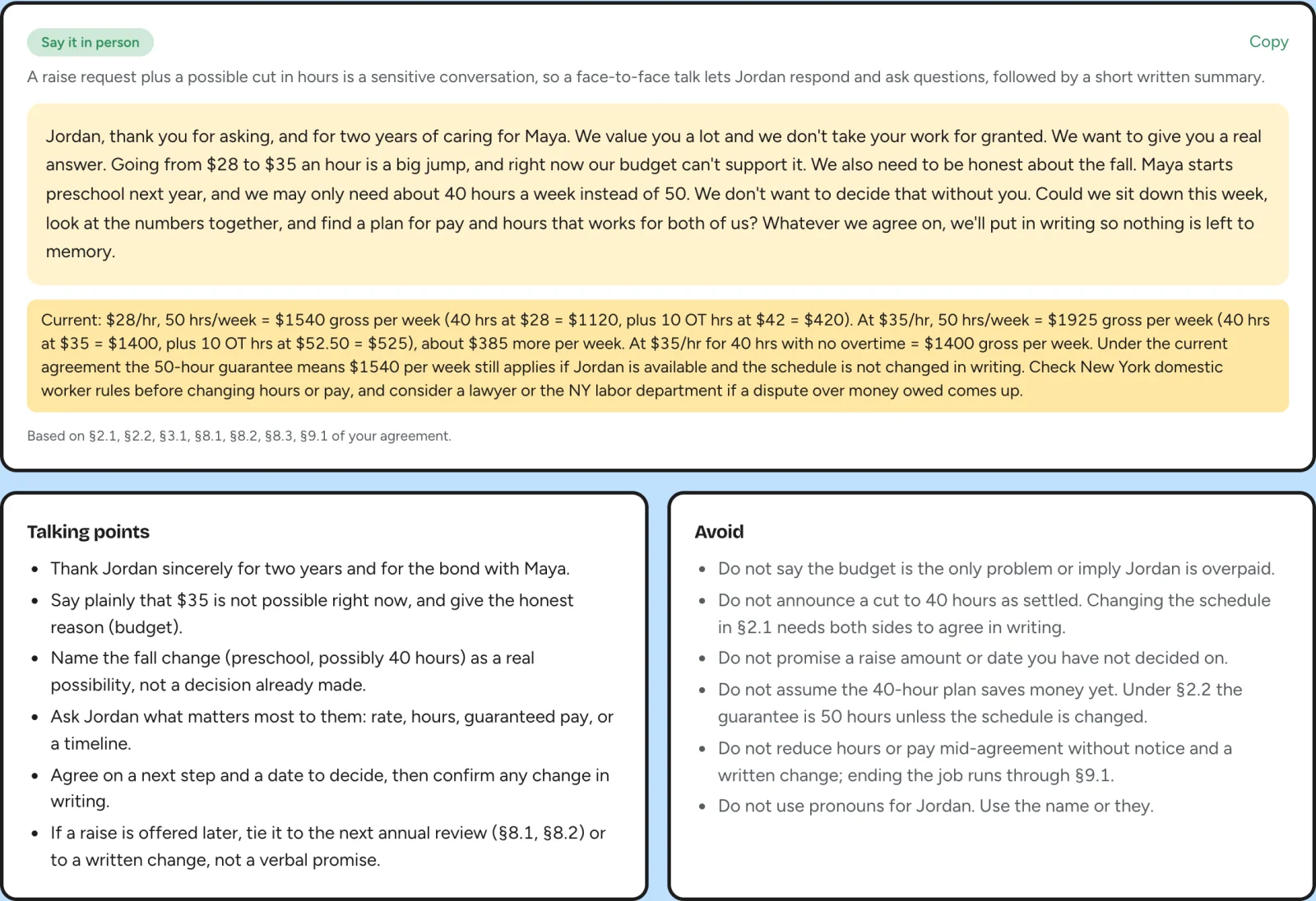 maklo's Hard talks drafting a reply to the $35 request above, with the numbers worked out from the sample agreement.
How to answer
Whatever the number, a few things make the conversation go better:
- Answer within a few days. A raise request left hanging reads as a no and a lack of respect.
- Talk in person, then put it in writing. Confirm the new rate and start date in a short written amendment.
- Lead with what you value. Then the number. Then why, with real figures.
- If it's not everything they asked for, say what you can do and when you'll revisit. Six months is a reasonable check-in when money is tight.
- Consider non-cash terms if they matter to your nanny: more paid time off, a health insurance contribution, a schedule that ends earlier.
If you'd like help with the wording, maklo's Hard talks drafts the reply from your agreement, with the math done and a list of what not to say. Your nanny agreement should also say when pay is reviewed, so raises have a time and place.
 A review clause (§8 in maklo's agreement) gives raises a set time, so they're a scheduled conversation rather than a surprise.
Clause you can copy
Reviews and raises. Pay is reviewed every [12] months, on or near the Nanny's start date. Raises are not automatic and consider cost of living, performance and any change to the job. Changes to pay or hours take effect only when written and signed by both.
This guide is general information, not legal or tax advice.