How to let a nanny go: notice, severance and what to say
By the maklo team · November 29, 2026 · 3 min read
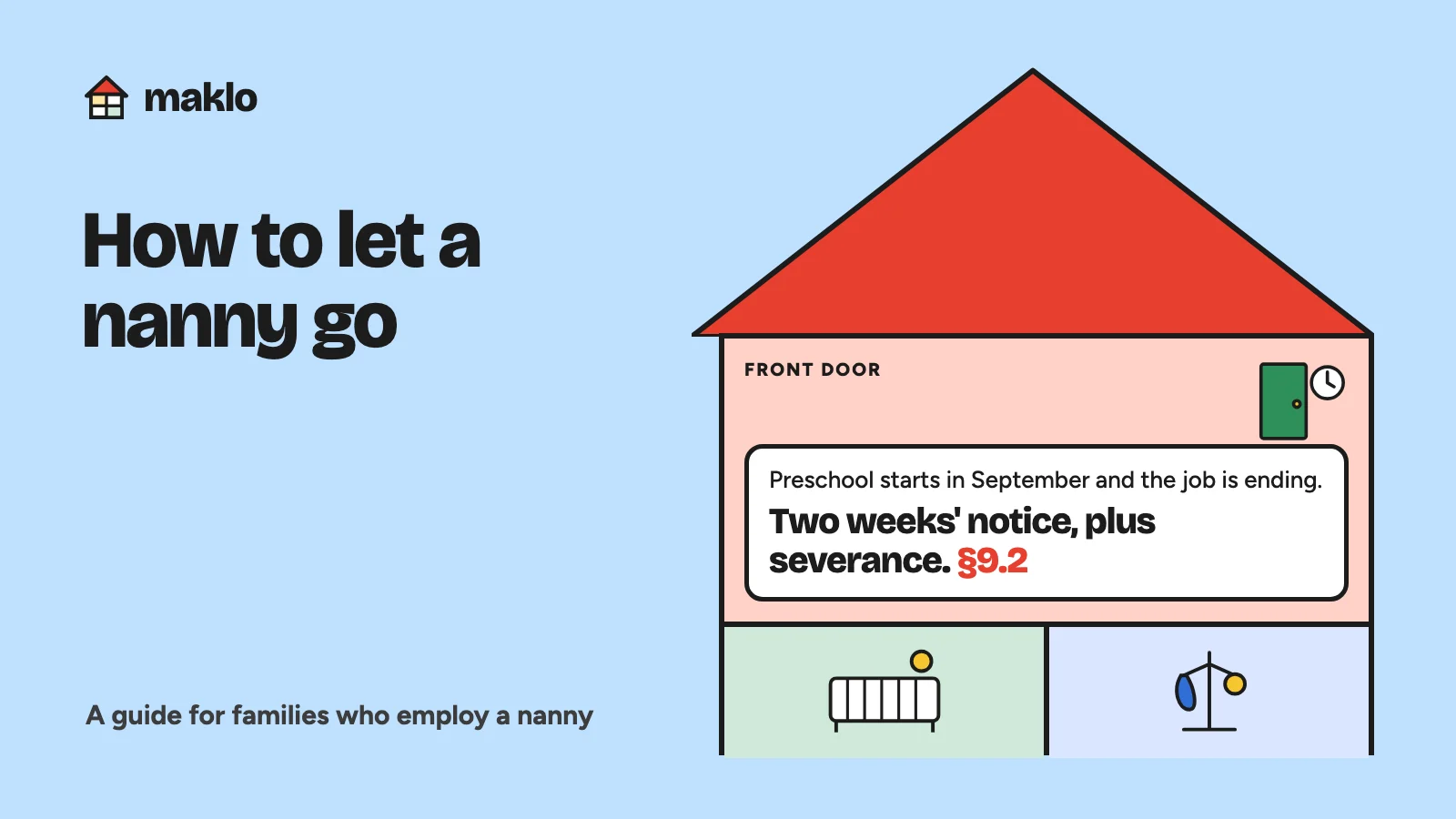
When a nanny job ends for reasons that aren't the nanny's fault, the usual practice is two weeks' notice or two weeks' pay instead, plus severance of about one week's pay for each year worked. When it ends for cause, such as a safety problem or dishonesty, families end it the same day without notice pay. Either way, the conversation goes better with a plan, a letter and the final paycheck ready.
Ending the job is one of the hardest conversations in r/NannyEmployers. Most families aren't firing anyone. A child starts preschool, a parent loses a job, the family moves. The nanny has often been part of the children's lives for years, and how it ends is what everyone remembers.
Decide which kind of ending it is
Without cause (layoff, move, new childcare, budget). Nothing the nanny did. Give notice or pay instead, pay severance, write a good reference, and help with the transition.
For cause (endangering the children, theft, dishonesty, substance use on duty, repeated no-shows after a written warning). End it now. Don't ask the nanny to work out two weeks; household payroll guides advise against it.
Performance problems that aren't urgent. Give a clear, written warning first, with what needs to change and by when. If it doesn't change, you'll end it without the surprise, and you'll have a record if there's an unemployment claim.
Notice and severance
- Notice: two weeks is the floor for a full-time nanny. Paying the two weeks instead and ending sooner is often kinder for the children and for you. Give more notice when you can see the change coming, such as a preschool start date months away.
- Severance: no law requires it, but GTM's guide suggests one week per year worked with a two-week minimum, and most nanny agreements promise something similar. If your agreement promises it, pay it.
- Pay the balance: pay any unused PTO your agreement says is paid out. Some states require it.
With a nanny earning $1,140 a week who has worked for you for three years, an ending without cause typically looks like two weeks' notice pay ($2,280) plus three weeks' severance ($3,420), before taxes.
The final paycheck
Federal law doesn't set a deadline for final pay, so your state does. Some states require final pay on the last day when the employer ends the job, including California and Massachusetts; others allow the next regular payday. HomeWork Solutions keeps a state list, and your state labor department has the official rule. Have the check ready before the meeting if you can.
The final paycheck is still payroll: withhold and report it as usual, and your nanny's W-2 covers everything paid in the year.
What to say
Keep the meeting short, private, and away from the children. Say the decision first, then the reason, then what happens next.
"Jordan, we've made a hard decision. Maya starts preschool in September, and we won't need a full-time nanny after August 29. You've been wonderful with her, and we want to make this as easy as we can. We'll pay you through the end of August and three weeks of severance on top, and we'll give you a strong reference. Can we talk about how to tell Maya?"
For cause, be just as direct and don't debate it:
"Jordan, we're ending your employment today. On Tuesday Maya was left alone in the car, which our agreement lists as a reason to end the job immediately. Here's your final paycheck and a letter with the details. We need the house key back."
Then put it in writing: a short letter with the last day, what the final paycheck includes, when it's paid, and anything that must be returned (keys, car seats, a car, a credit card). Collect them at the meeting and change door codes the same day.
maklo's Hard talks drafts this conversation from your agreement, with the notice and severance figures worked out.
Telling the children
Tell them together, simply and honestly, in words they understand: "Jordan is going to be a teacher at a new job, and Maya is starting school." If the ending is friendly, a goodbye visit or a photo book helps young children a lot.
Make the next ending easier
Endings go wrong most often when nothing was written down. A nanny agreement that sets the notice period, the severance, and the reasons for ending immediately turns the hardest conversation into following the plan you both signed. In maklo's agreement that's §9, and the free agreement builder fills it in for you.
This guide is general information, not legal advice. Final pay and paid-leave payout rules vary by state.